
Finding Douglas County Residents
A good Douglas County residents search starts with the record that is keyed to the fact already known. For a current address, check the county assessor’s property route and then the Register of Deeds index. For a name, Nebraska VoterView, the Judicial Branch case search, and state license databases each answer a narrower question. For an earlier household, the Omaha Public Library directory run is often the better first stop. Each source records a role at a date. None supplies a complete, current list of everyone at an address.
Keep a short log while working: the spelling entered, date range, source URL, result identifier, and what the result actually says. An owner shown on a parcel, a party listed on a deed, a voter-registration result, and a name in a directory are different signals. Comparing them avoids turning a dated listing into a claim of present residence or legal ownership.
- Normalize the street address with USPS, then note the city label, ZIP Code, and any historic spelling.
- Use the Douglas County assessor starting point to locate the parcel or legal description, and record the retrieval date.
- Follow the legal description into Landmark’s Addition or Lands route and save book, page, image, and instrument details.
- For a named person, use the official voter or court tools only for the records and access level they actually describe.
- Check Omaha Public Library directories, newspapers, maps, or archive finding aids for earlier years, then request a narrow record from its custodian if needed.
Note: A no-result screen can reflect spelling, date, jurisdiction, privacy, or portal coverage rather than proving that no record exists.
Douglas County Resident Custodians
Douglas County’s core resident-record custodians are concentrated in Omaha, but their functions do not overlap. The Assessor handles valuation and parcel administration. The Register of Deeds keeps recorded land instruments. The Election Commission provides county election information, while Nebraska VoterView supplies public registration and polling-place utilities. The court clerk and statewide JUSTICE system are for cases, not a population list. Keeping those roles separate makes a Douglas County residents directory search more accurate.
Douglas County Register of Deeds
Civic Center, 1819 Farnam Street, Suite H-09
Omaha, NE 68183
(402) 444-7159
Douglas County Assessor
Civic Center, 1819 Farnam Street, Suite 400
Omaha, NE
(402) 444-7457
Douglas County Election Commission
12220 W. Center Road
Omaha, NE 68144
(402) 444-8683
The detailed address-first sequence belongs on the Douglas County street directory page. For an office request, name the record series, person or address, approximate date, desired format, and known parcel, book/page, or case number.
Douglas County Parcel Records
The Douglas County Assessor is the official property-record starting point for a Douglas County residents directory search tied to a street. The county’s live advanced-search form did not render reliably during the research pass, so its complete required fields, result sorting, and online coverage date should be checked live. The state’s county assessor directory is a useful second route for confirming the office and parcel-search link.
A parcel record can join an address to a legal description and assessment information. It does not settle every question about title or occupancy. Save the parcel or account ID, situs address, legal description, tax district, values, property class, map link, and retrieval date only when the official result displays them. The difference between a situs address and a mailing address matters, especially when comparing a property record to a dated directory.
- Parcel
- A local identifier for a piece of land used to connect assessment and map records.
- Situs address
- The physical property address shown for a parcel, which can differ from an owner’s mailing address.
- Index
- A finding tool that points to a record; it is not necessarily the record image itself.
- Criss-cross directory
- An address-arranged directory used to look for a historical household at a location.
Douglas County Voter Lookup
Nebraska VoterView has separate Registration Information, Polling Place Search, and Pending Registration tools. Registration Information asks for first name, last name, and county. Polling Place Search uses a residential address. The Douglas County Election Commission’s own voting-information form uses a house number and ZIP Code to return polling-place, candidate, ballot, elected-official, and political-subdivision information. A voter result is an administrative record with access rules, not a general household roster.
| VoterView route | Inputs documented | What to retain |
|---|---|---|
| Registration Information | First name, last name, county | Match status and displayed registration context |
| Polling Place Search | Residential address | Location result or no-match message |
| Pending Registration | Registration receipt number | Receipt-based status only |
Nebraska Revised Statute §32-330 permits inspection of the voter register but limits copies, allowed purposes, and online distribution. Protected categories and Address Confidentiality Program participants require special care. For a list request, use the Election Commission’s written or in-person channel, identify the permitted purpose, and provide the statutory oath information rather than assuming an online download exists.
Nebraska VoterView provides the state’s public registration and polling-place utilities.
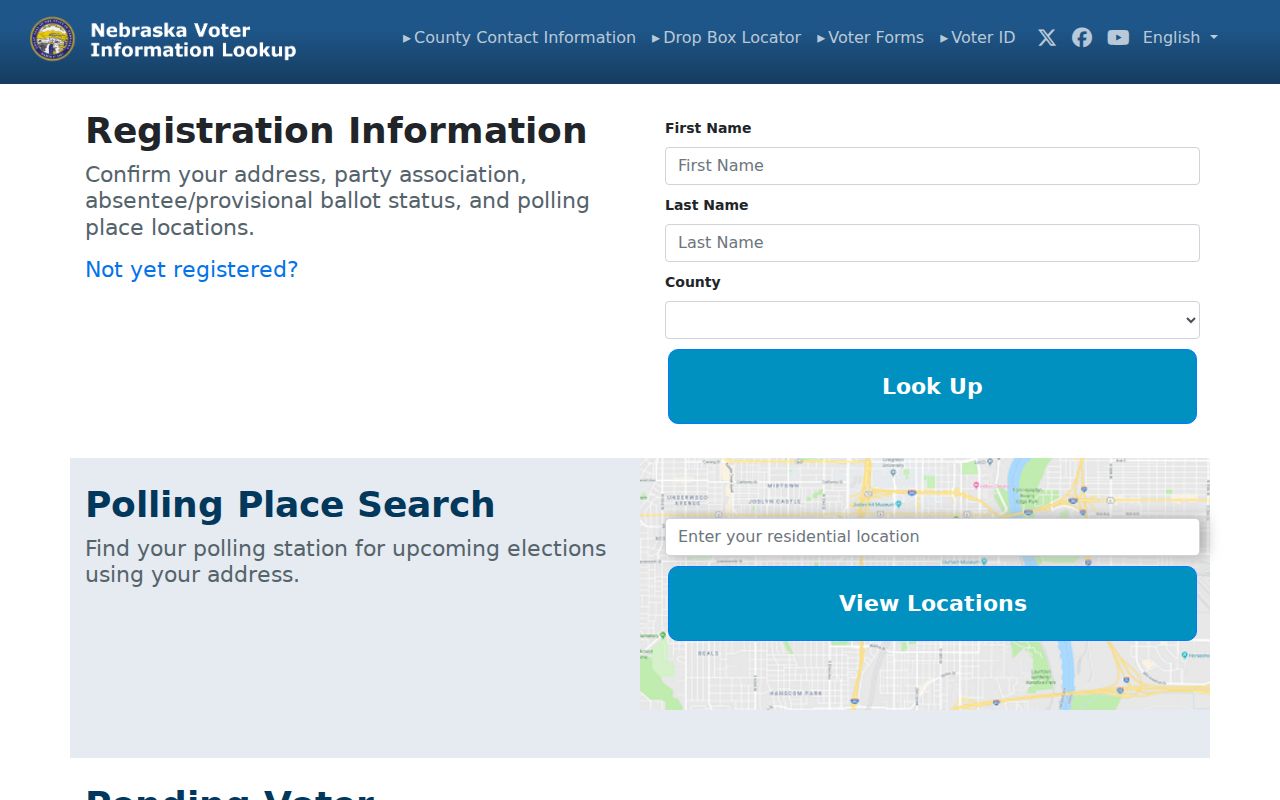
The form’s separate routes help keep a registration check, an address-based polling lookup, and a pending-registration check distinct.
Douglas County Deed Index
The Register of Deeds’ Landmark Index Book Search follows the legal description, not simply a modern street label. Choose Addition or Lands as the search type. Addition research uses an Addition selector; Lands research uses Section, Township, and Range. The index type is Deed or Mortgage, and results can show the addition or land description with book, page, and image references. That structure is useful for tracing recorded instruments once an assessor or map result supplies the needed description.
Landmark’s help says Index Book Additions are available through 1989 and directs post-1989 additions to Landmark Web. It describes a viewer with ten-page navigation, direct page entry, zoom, download, and a microfilm-request option. Lands coverage is described as September 2014-current through a linked route. Terms, login requirements, image access, and current charges need live confirmation. A deed party is evidence of a recorded transaction, not proof that the person lived at the property.
Landmark’s official Index Book Search shows the Addition and Lands paths before a researcher opens an index image.
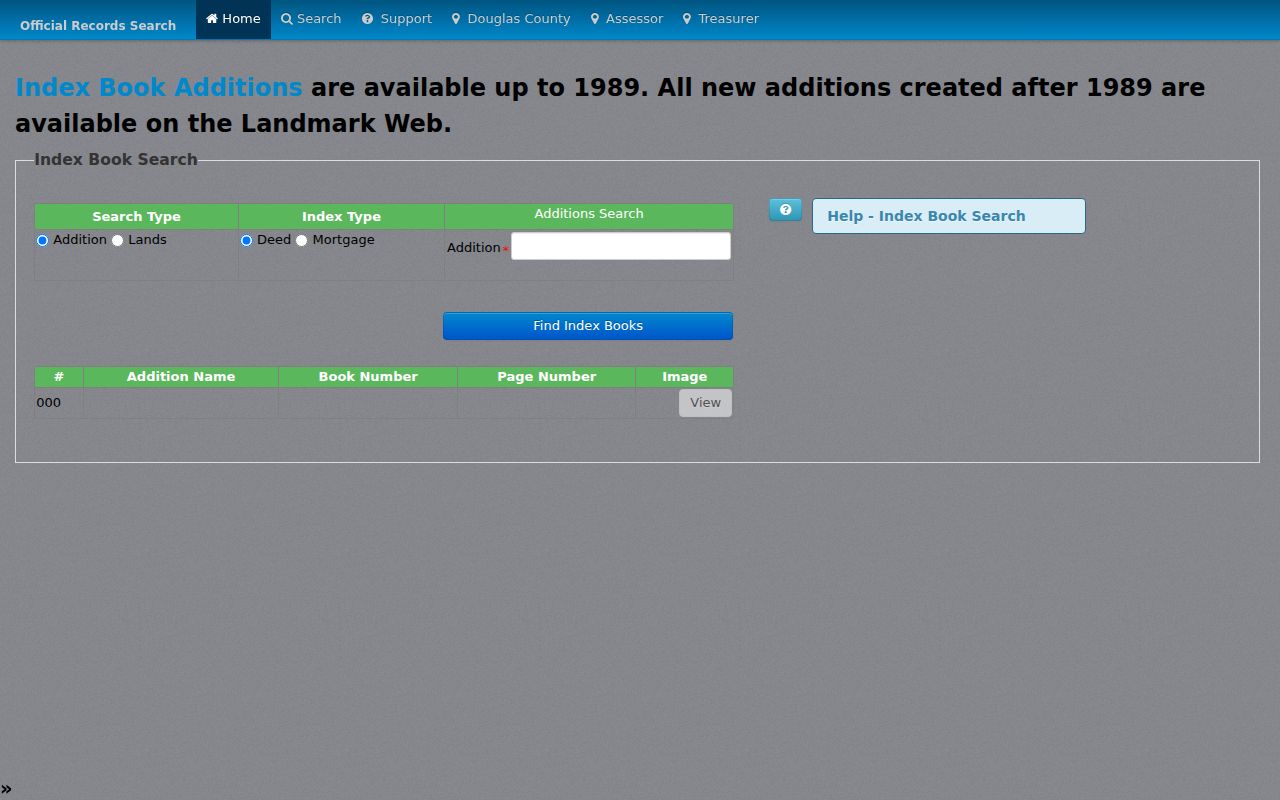
Record the selected route, legal-description terms, book and page so the same index reference can be found again.
Current Douglas County Directories
Current Douglas County resident sources are purpose-built, not one master directory. The assessor connects parcels with valuation records. Landmark indexes parties to recorded instruments. VoterView confirms limited registration information through a form. JUSTICE provides public court case information. DOGIS maps current parcels and civic geography, while One Omaha and City Planning maintain neighborhood-association context rather than member rosters. The right source depends on whether the question is about a property, a registration, a recorded transaction, a public case, or a current geographic overlay.
| Douglas County source | Recorded connection | Custodian | Access route |
|---|---|---|---|
| Assessor property route | Parcel and assessment information | Douglas County Assessor | Official web starting point; live fields need confirmation |
| VoterView | Registration or polling-place context | Nebraska election system | Public form, subject to voter-record limits |
| Landmark | Parties to recorded deeds or mortgages | Register of Deeds | Index Book Search and Landmark Web routes |
| JUSTICE eServices | Public party and case information | Nebraska Judicial Branch | Free general list; detail and one-time search options |
| Neighborhood association directory | Current civic geography and contact context | City Planning / One Omaha | Directory and map layers; no member roster verified |
The Election Commission’s Find Your Voting Information tool combines house number and ZIP Code for election information. Its August 3, 2026 administrative display listed 367,700 registered voters, a dated total rather than a standing population measure. When a question concerns one named person rather than a source category, use the narrower verification sequence on the Douglas County resident lookup page.
The Douglas County Election Commission supplies the county’s house-number and ZIP-based voting-information route.
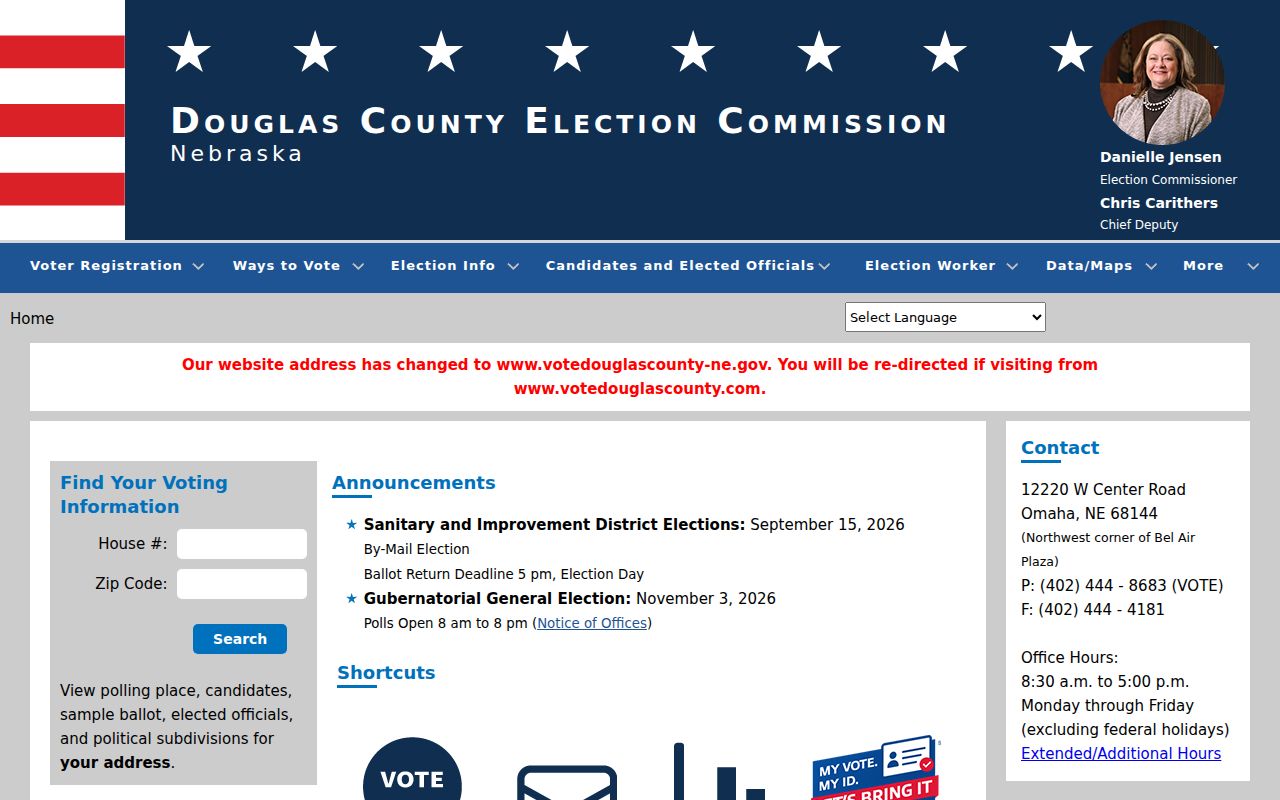
The county tool is a useful election-information check, but it should not be treated as an unrestricted resident list.
Douglas County Court Trails
Nebraska Judicial Branch JUSTICE eServices covers all 93 county and district courts. Its general search can use party name, court type, case type or subtype, county, year, judge, attorney, judgment date, or court case number. The official explanation says general lists are free, case detail is $2, and document images carry no added charge. Search screens show public case information, not a complete personal history, and an absent result can reflect installation dates, a sealed matter, a spelling difference, or access limits.
For a one-time party-name search, the Judicial Branch describes a $17 route that can return up to 30 public cases for three calendar days and may still charge when there is no result. It reports a 24-hour lag and document images for filings after April 16, 2008. The Douglas County Law Library, Room H07 at the Civic Center, offers limited on-premises public JUSTICE access and legal research materials. Federal matters are separate and require PACER or the U.S. District Court for Nebraska.
Nebraska State Patrol criminal-history requests are a different state process, available online, by mail, and in person, with a stated $30 nonrefundable fee and up to three business days under state law.
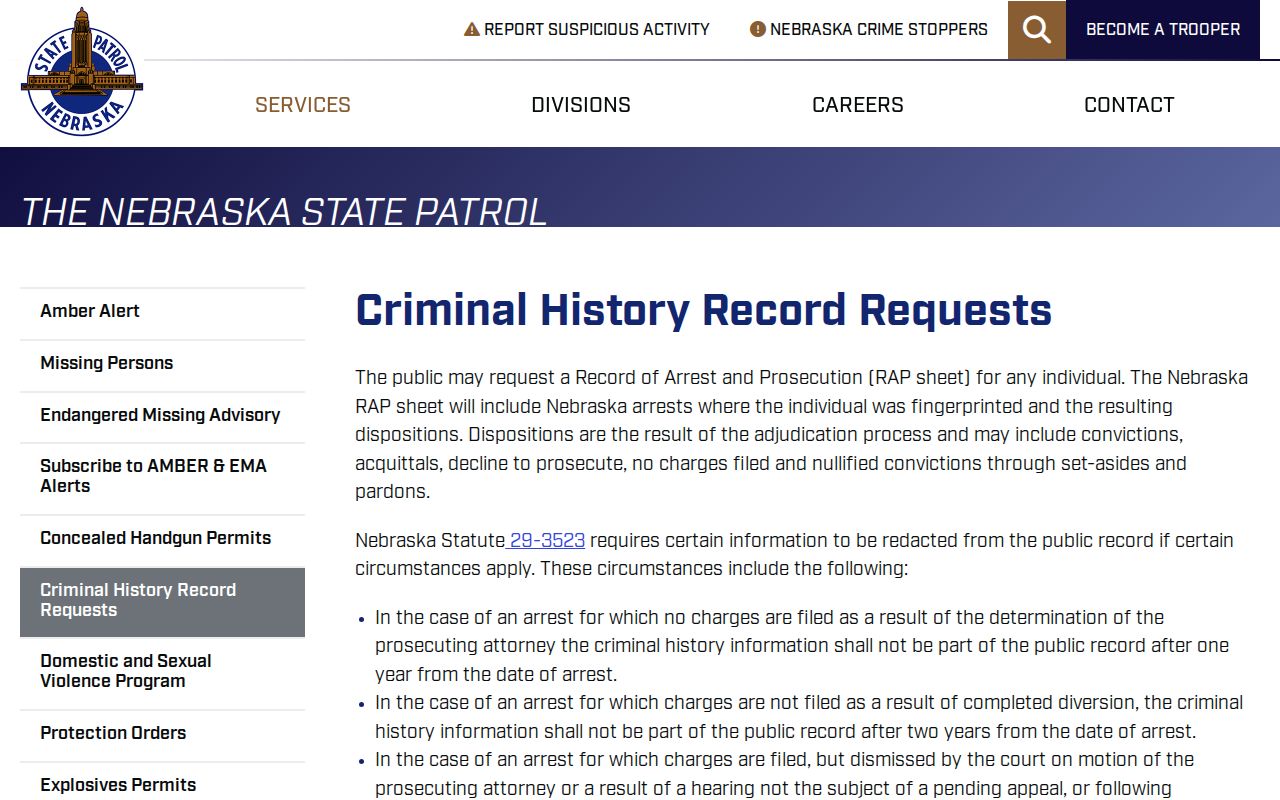
A request response is defined by its own matching rules and redactions, so it should never be substituted for a county court search.
Douglas County Vital Records
Nebraska DHHS keeps birth, death, marriage, and divorce certificates through a proper-purpose system, not an open name directory. The DHHS service-options page documents walk-in, view-only, mail, and online routes. It lists $17 for a birth certificate and $16 for death, marriage, and divorce certificates. Relationship, identity, purpose, and the record type control whether a request is available. Use the current service page for forms and delivery details instead of relying on an old application’s mailing information.
Genealogical release follows 174 NAC 3-004.06 when the requester documents that the registrant has been deceased at least 50 years. That rule does not make every old certificate public. Nebraska Public Records Act exemptions also protect specified vital-event information and certificate numbers. For early local evidence, the RG230 finding aid and OPL microfilm descriptions identify county and city birth and death register series with differing coverage statements, which should be checked against the repository reel inventory.
Nebraska DHHS Vital Records outlines the official certificate and genealogy access paths.
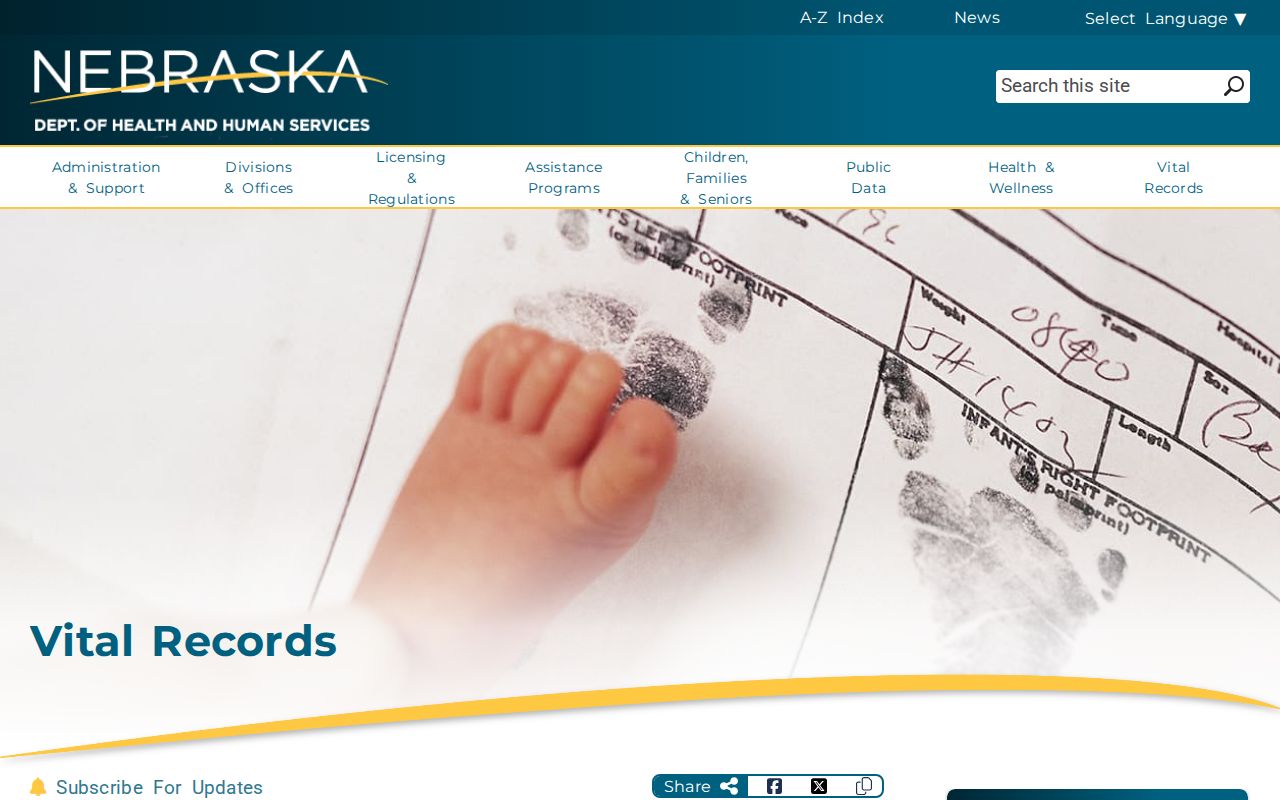
The official access rules make a vital record a verification step only when the requester qualifies for that particular record.
Note: A date, name, or address clue helps identify a likely record but does not overcome the proper-purpose requirement.
Historical Douglas County Directories
The Omaha Public Library city-directory collection lists Omaha print directories from 1866 to the current period and Omaha microfilm from 1866 through 2001. A historical entry may show a printed name, residence, address, occupation or business, and address sequence. It is a dated publication reference, not proof of ownership, relationship, or current residence. Record the volume year, publisher, repository, format, page, and whether the evidence came from print, microfilm, or a digitized scan.
The 1866 Collins directory and McAvoy’s 1898 directory are digitized dated samples, not stand-ins for every year. The full run, abbreviations, nearby-city coverage, microfilm access, and methods for following a household belong on the Douglas County city directory page. Pair a directory hit with a parcel, deed, map, newspaper, or other source before drawing a conclusion about a household.
Douglas County Library Records
Omaha Public Library’s genealogy and local-history collections are an important historical layer for a Douglas County residents directory search. The library identifies more than 7,000 microfilm and microfiche items alongside city directories, newspapers, maps, cemetery material, yearbooks, funeral pamphlets, government documents, and local histories. Its microfilm room lists four readers able to scan to USB and two that can print. The category list includes city directories, census, church, cemetery, naturalization, marriage and vital records, military records, and newspapers.
Library research help accepts focused written requests. Staff can check the in-house obituary indexes, the 1866-current directory collection, and book indexes for up to three names. The published basic copy request is $5 in advance; extended research is capped at a half hour for $20 in advance including five copies, with additional pages at $1. The January and March 2026 announcements about the genealogy move mean current location and hours should be checked before a visit.
Omaha Public Library genealogy and local history is the central public route for these collections.
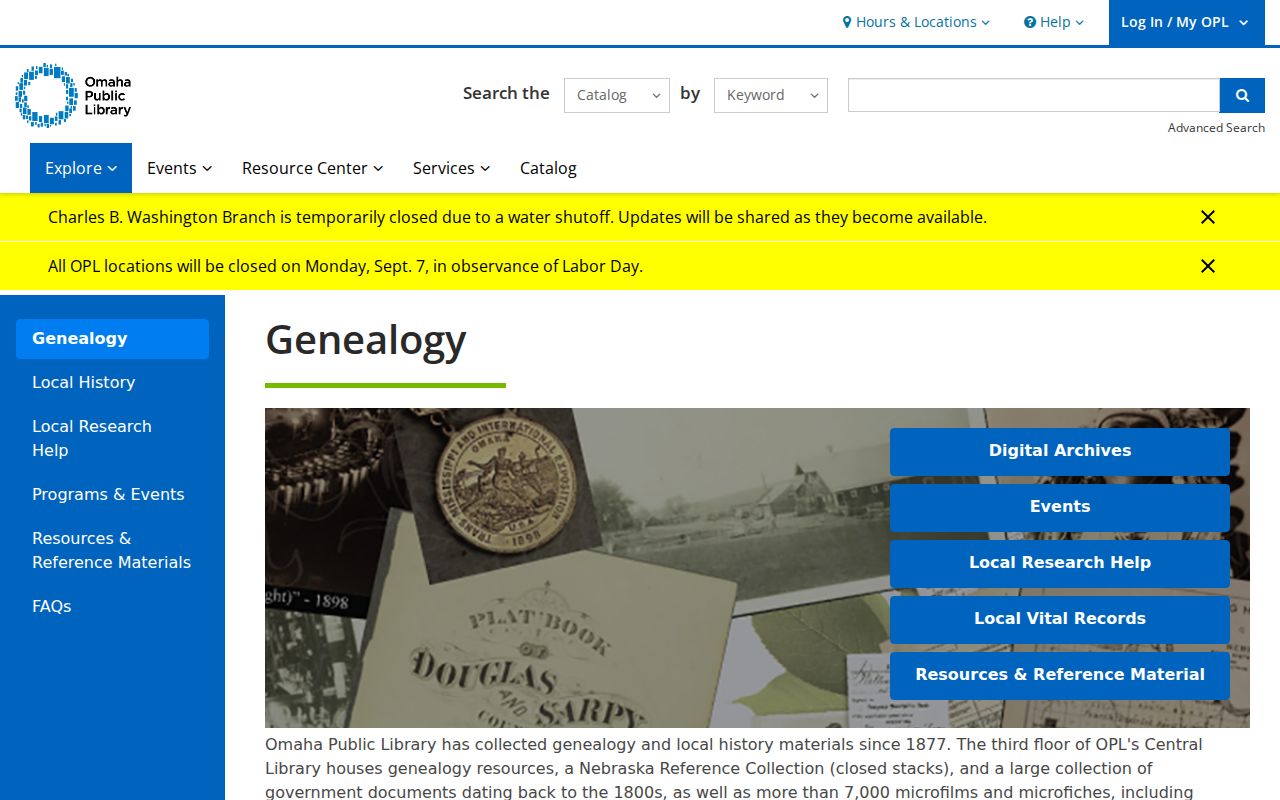
The collection’s combination of directories, microfilm, maps, and newspapers makes it useful for connecting a name to a particular year and place.
Douglas County Records Requests
Nebraska’s Public Records Act, Neb. Rev. Stat. §§84-712 through 84-712.09, lets residents and other interested people examine public records during normal office hours and make their own copies. A custodian may charge added copying costs and, in defined situations, labor. The statute does not make every database searchable in a preferred way and does not require an office to create a new compilation. A written request should identify an existing series, date range, person or property, desired format, and any record identifier already found.
Section 84-712 provides for a response, estimate, or denial explanation within four business days. After an estimate, the requester has ten business days to accept, change, or withdraw it. Ask for segregable nonexempt portions if the office cites an exemption. This method works better than a broad request for everything about a name, particularly where the county clerk, recorder, assessor, court, library, and archives hold separate series.
Nebraska Public Records Act §84-712 is the official starting point for inspection and request rules.
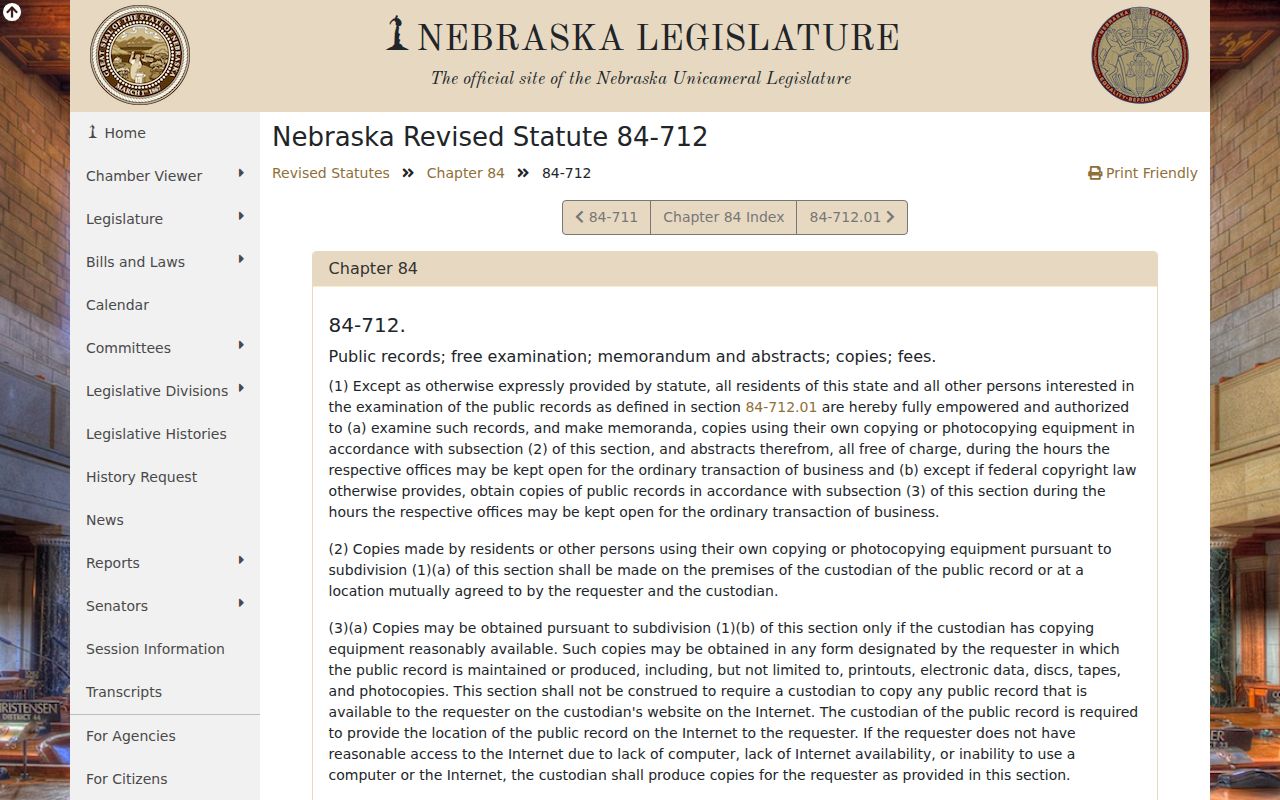
Use the statute to frame a narrow custodian request, then preserve the office response and any fee estimate with the research notes.
Douglas County Privacy Limits
Public access has firm limits in Douglas County and Nebraska. Sections 32-331 and 32-948 protect categories of voter information, and §84-712.05 lists exemptions for confidential and sensitive records. Nebraska’s Address Confidentiality Program provides substitute addresses for qualifying survivors of domestic violence, sexual assault, stalking, and related circumstances. A substitute address is not a clue to be reverse-engineered. Vital records also have their own access rules, including proper purpose and genealogical eligibility.
Protecting a person’s privacy also improves the evidence trail. Keep sensitive data out of notes when it is not needed to distinguish a record, label the source and date, and avoid assuming that a missing result proves a person was absent. A lawful, personal research question is best answered by the custodian’s published route and the narrowest reliable record.